Tackling the developer shortage
Finland is facing a shortage of coders – nominally a shortage of experienced coders, as who would want to invest time and energy in training beginners? In a fast-moving field, it’s considerably easier to hire someone who already knows their stuff and is capable of working completely independently. But what happens when everyone wants to hire these experienced individuals who already know everything, and there simply aren’t enough skilled people for everyone?
HS Visio published an article regarding a topic from May this year, where university lecturer Matti Luukkainen talks about the University of Helsinki's Full Stack Open course, which aims to serve as one solution to the industry's labour shortage. On the online course, students learn everything from software production to working with clients, but this alone is not enough to solve the current crisis. Luukkainen states that a change in the attitudes of companies would help the matter, if companies would give recent graduates the opportunity to grow and develop into those experienced guys that everyone wants.
A change in attitude might help the situation, but on the other hand, companies are not keen to get involved in this for fear that experienced chaps will still leave for higher pay elsewhere as soon as possible. Many companies have indeed started hunting for coders by raising salaries and offering significant recruitment bonuses to those who stay with the company longer (read more from the article by Jorma Erkkilä). Others have turned their search abroad, where efforts are being made to recruit creators from, among others, Childcare and moving assistance additionally Business Finland with financing.
At Jidoka, we believe that projects like the online course offered by the University of Helsinki could be a solution to the situation, in addition to companies changing their mindset. For this reason, we have focused our interest on less experienced coders and career changers for years, as we believe that a company develops alongside its employees and beginners should be given the opportunity to develop in their profession.
Jidoka – a different employer
Jidoka is a unique employer in the IT sector, focusing on applicants' potential rather than their experience. Reading IT job advertisements often gives the impression that only highly experienced top coders are sought, and competition for these highly skilled individuals is fierce within the industry. At the same time, it is important to remember that experienced coders rarely change jobs, meaning there are simply not enough of them to go around.
It's not the experience, but the potential
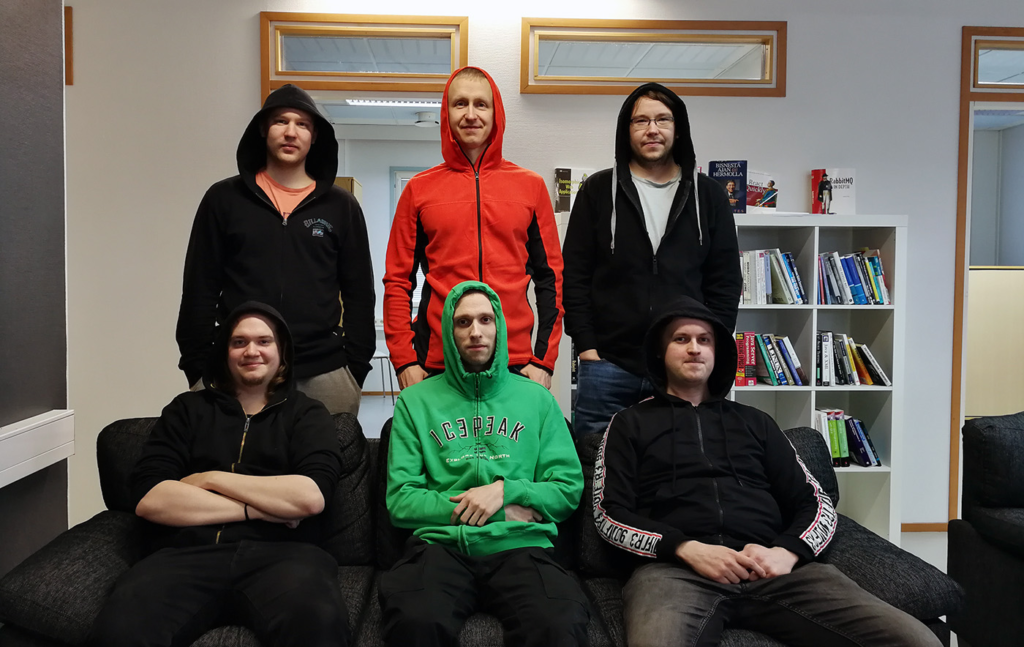
In that sense, our company is a very different kind of IT firm, as our recruitment process focuses on spotting untapped potential rather than prior experience. Living proof of this is the fact that, of the 31 Jidokans, only 8 joined the company directly from another employer. The remaining 23 Jidokala employees – a staggering 74% – have been employed by us without any prior IT work experience, through various training and employment programmes. In addition to this, a staggering 20% of our staff are career changers who have become unemployed or who had not been offered a permanent position before joining us.
It is known that there is a severe labour shortage in the IT sector for experienced software developers, but Jidoka believes that the team can accommodate more than just top-tier coders. However, mere experience and knowledge do not guarantee a contender's success at the company, and even experienced professionals must continuously develop and learn new things in a field that is rapidly advancing. Houses are not built by architects alone; the work largely requires ordinary craftsmen.
An impressive 74% graduates have found employment with us without any prior work experience in the IT sector.
Recruitment process
When we meet someone for the first time who has no IT experience, we describe our requirements to them clearly: we are only interested in individuals who are capable and willing to learn, motivated, tenacious, and also good people. The latter requirement means that the person is helpful, can get along naturally with others, has no prejudices towards others, and accepts their colleagues as they are. Furthermore, we emphasise that we work hard here and it’s not worth coming to test whether you might become interested in the job at some point in the future.
In the initial meeting, we therefore focus not on the applicant's skills, but on the applicant themselves as a human being and personality. Then we throw the ball back to the applicant and ask them to get back to us if Jidoka interests them as a potential employer. After such an initial meeting, some do not get back to us, but those who take up the opportunity we offer do very well.
Our recruitment model has successfully guaranteed us excellent, reliable, and permanent employees who can learn anything. Ultimately, all a person needs to succeed is an opportunity, genuine care, and a little encouragement. How many IT companies can truly boast that only a quarter of their staff joined the company already experienced, with the rest recruited as ”juniors” or career changers, given the chance to prove themselves? Jidoka can proudly state that it is one of those few companies 😊
When Mikko graduated as an IT engineer, there was supposed to be plenty of work available in the IT sector. Despite trying hard, Mikko couldn't find a job. Mikko attended several interviews, but the obstacle to employment always seemed to be a lack of experience. Solid knowledge of various programming languages was required, along with some specific hobbies and all sorts of other things that Mikko, lacking experience, couldn't offer his potential employers at that stage. The fact that he was sincere, persistent, diligent, and unyielding just didn't seem to be enough. However, Mikko didn't give up, and in late winter 2020, he got to meet Jidoka through a training and employment program.
At the meeting, it was emphasised to Mikko that, above all, ”rookies” are required at Jidoka to have the ability and willingness to learn, self-confidence, flexibility, unwavering motivation, and resilience. Coding skills were only of secondary importance, as software development frameworks and technologies are constantly changing. Furthermore, it was stressed that only good people who get along with each other and are happy to help each other are wanted. It was also clearly mentioned that hard work is done at Jidoka and that it is not worth coming to work here as a ”rookie” just for the sake of trying, but rather one had to firmly believe in oneself and genuinely want to be employed. These requirements did not deter Mikko, and just a few days later he started with us.
In just over a year, Mikko has become a valuable, versatile, skilled, and reliable employee for us, having developed immensely in software development roles by participating in Jidoka's diverse R&D projects. In addition to coding work, Mikko has been involved in the preparation and installation of digital display solutions, making him an even more valuable employee to us.
In the initial meeting, we don't focus on the applicant's skills,
but to the applicant themselves as a human being and an individual.
Junior developer career progression
Almost without exception, people join Jidoka as junior developers through a traineeship and employment programme. At that stage, a budding developer won't have actual work experience yet, but they will have plenty of willingness to learn, enthusiasm, and perseverance. Our tactic is to throw junior developers straight into the deep end, as we believe that the best way to learn is by doing – but of course, you don't have to flail in deep water alone, as colleagues are always there to support and help in problem situations.
Tasks for junior developers are generally based on Jidoka's own product development, within which there are always interesting projects. We have been developing our own smart device (Jidoka Smart Hub) and its surrounding IT infrastructure for almost ten years, and we write front-end, back-end, and integration code with modern technologies for this smart device and its infrastructure. Therefore, there are always interesting challenges for a junior developer and an opportunity to show their worth.
Usually, after about one to two years, a junior becomes a ”mediore”. At this stage, they can move to client projects if they wish, which are mostly located in Tampere. Just a couple of years ago, our software developers who did client work coded directly at client premises, but nowadays the coding is mainly done from our own office or flexibly remotely.
Employee story: from cook to coder
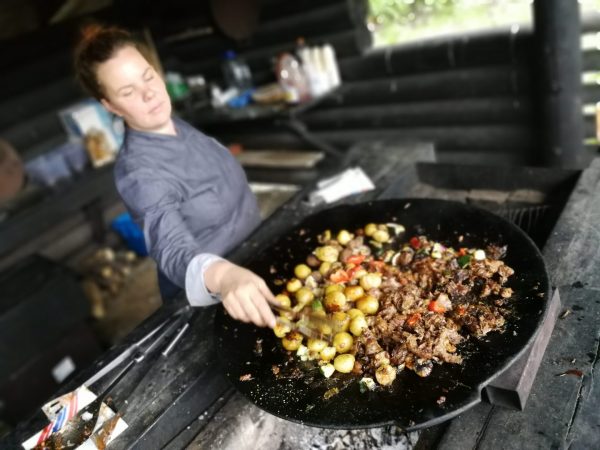
Niko's story is interesting. At one time, Niko graduated as a chef and actually cooked food professionally. However, Niko soon realised that coding interested him more. So, he went to study information technology at a university of applied sciences. Niko got employed at Jidoka through an internship at TAMK, about which you can read more in a previous from our blog post.
For the first two and a half years, Niko worked on Jidoka’s own R&D projects, which allowed him to develop his skills in C# and Android programming, amongst other things. Once he had gained sufficient work experience, he moved on to working on projects for Jidoka’s clients. Although Niko used to cook delicious food for a living, these days he cooks up high-quality code.
We believe that a company develops together with its employees.
and beginners must be given the opportunity to develop in their profession.
The importance of workplace well-being
The well-being of our employees is of paramount importance to us. We genuinely and sincerely care about our employees, which means we constantly listen, support, and mentor them. Our employees can come to us with their worries and concerns with a very low threshold, and these issues don't necessarily have to relate to work matters; we aim to support our employees regardless of the nature of their challenges. For example, employees can call their supervisor in problematic situations, even outside of working hours, and we aim to find a good solution to the matter straight away.
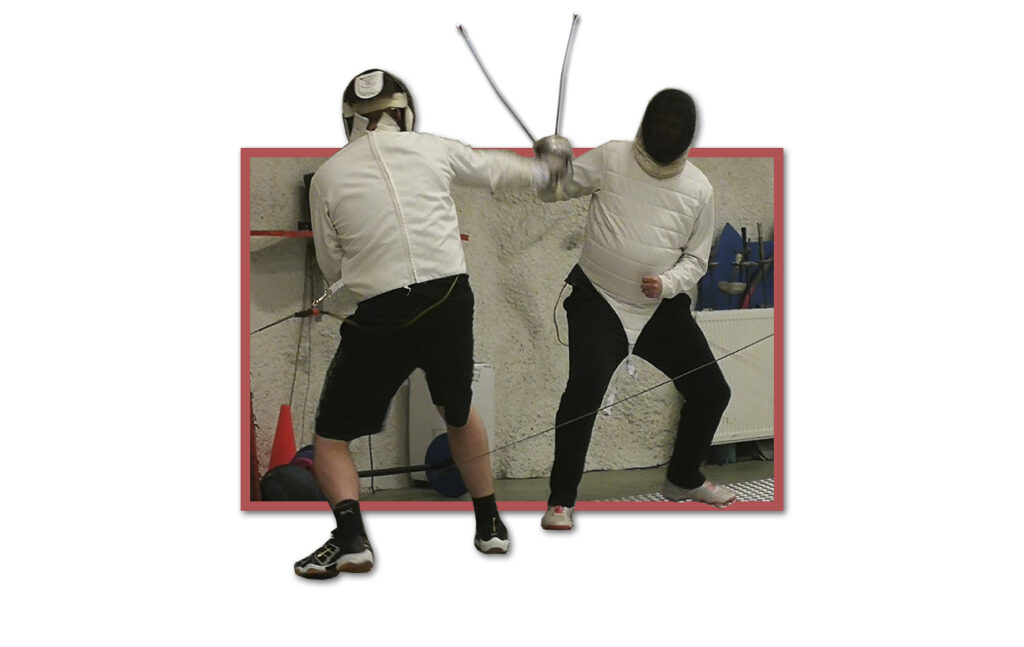
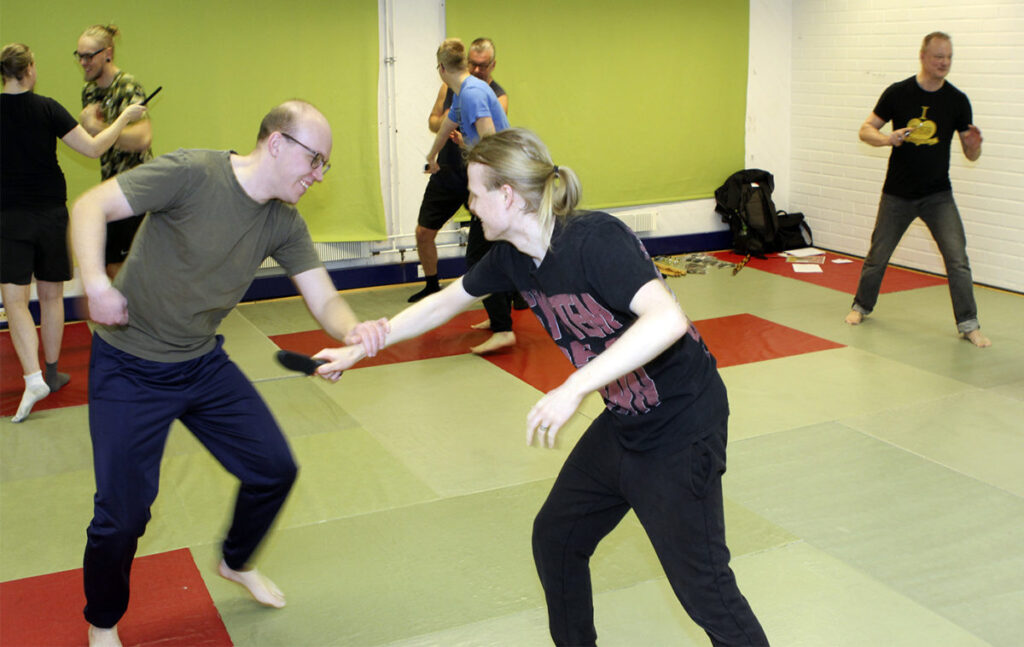
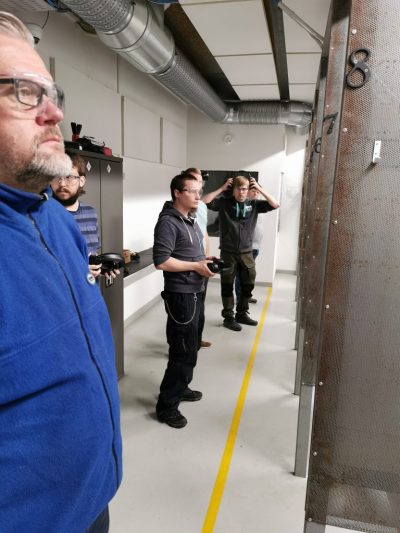
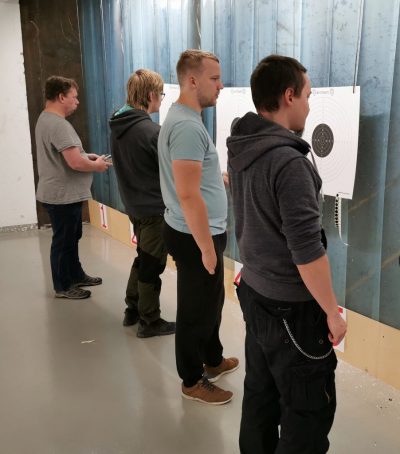
Especially during the COVID-19 pandemic, the importance of the work community and its support are extremely vital. That's why we have a diverse range of club activities, which can be used to build strong bonds with colleagues, even if work is primarily done remotely: there's club activity focused on sports, board games, a cycling club, and other social activities. Jidoka is therefore a close-knit community whose members support each other also outside of working hours, and we strive to make each other's lives easier in every way possible.